Vendor Lock-In
Also known as: Product-Dependent Architecture, Bondage and Submission, Connector Conspiracy.
Vendor Lock-In shows up in systems that quietly become dependent on one supplier's proprietary approach, often with the vendor's active encouragement. The name Pottersville comes from the film It's a Wonderful Life: the alternate reality where one uncontested interest reshapes everything around it.
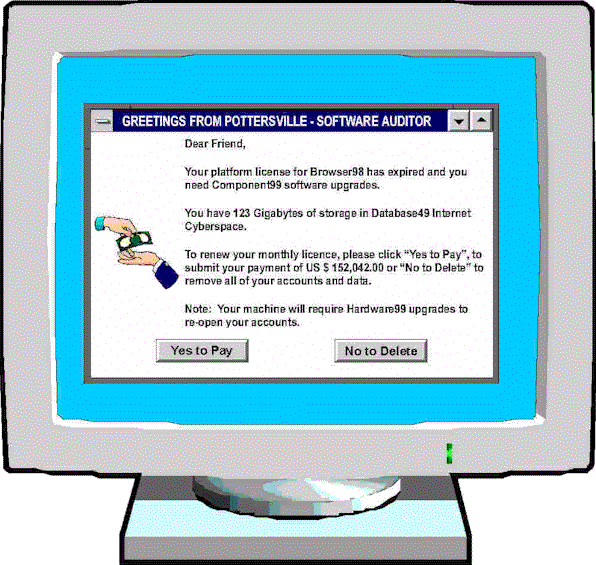
The project's architecture and the vendor's product become the same thing. That's fine until the vendor changes direction, raises the price, or gets acquired, and the project has no isolation layer between its own logic and someone else's roadmap.
Refactored Solution
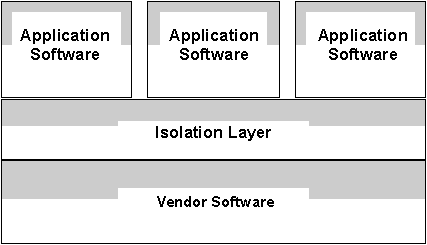
An isolation layer, an architectural boundary that keeps vendor-specific interfaces on one side and the rest of the system on the other, gives the project a real choice later. Without one, migration away from a vendor costs roughly what building the system cost the first time.
Product-Dependent Architecture, Bondage and Submission, Connector Conspiracy
System
Sloth, Apathy, Pride/Ignorance (Gullibility)
Management of Technology Transfer, Management of Change
Isolation Layer
For problems or questions regarding this web contact [Web Master].
Last updated: September 12, 2026